Let Your Gratefulness Overflow

 
Let Your Gratefulness Overflow
 

Let Your Gratefulness Overflow

        I am sending out the Weekly Words of Wellness column two days early this week in honor of Thanksgiving. In this column, I reference a video that I have shared before, one that always softens my heart and reminds me of the importance of being grateful for the things I too easily take for granted.  

     The title for this column comes from one of the most beautiful videos I have ever seen. The focus of the video is nature, love, and gratitude, and it is an excerpt from a longer TED talk. Watching and reflecting on this video seems like a powerful way to prepare for the celebration of Thanksgiving. You might even want to share the video when you gather with family and friends over the next few days. 

     The video brings beautiful photography together with words written and spoken by a Benedictine monk named Brother David Steindl-Rast. Brother David invites us to pay close attention to the simple gifts and blessings of life that can be so easily overlooked. He points out that paying attention to the wonder of nature and the wonder of the people we encounter in our lives is the basis for authentic love and gratitude. I could not agree more. 

The link to the video can be found HERE. You will not regret investing the five minutes it takes to watch.

     If you want to read along as Brother David speaks, the text for his words follows:

     You think that this is just another day in your life... It's not just another day. It's the one day that is given to you - today. It's a gift. It's the only gift that you have right now, and the only appropriate response is gratefulness. If you learn to respond as if it were the first day in your life and the very last day then you will have spent this day very well. 

     Begin by opening your eyes, and be surprised that you have eyes you can open. That incredible array of colors that is constantly offered to us for our pure enjoyment. Look at the sky. We so rarely look at the sky. We so rarely note how different it is from moment to moment, with clouds coming and going.

     Open your eyes. Look at that. Look at the faces of people whom you meet. Each one has an incredible story behind their face, Not only their own story, but the story of their ancestors. All that life from generations and from so many places all over the world flows together and meets you here like a life-giving water if you only open your heart and drink. 

     Open your heart to the incredible gifts that civilization gives to us. You flip a switch, and there is electric light. You turn a faucet, and there is warm water, and cold water, and drinkable water... a gift that millions and millions in the world will never experience. 

       And so I am wishing you will open your heart to all these blessings and let them flow through you. That everyone you will meet on this day will be blessed by you, just by your presence. 

     Let the gratefulness overflow into blessing all around you. Then it will really be a good day. 


May your gratefulness overflow into blessing all around you indeed.  Happy Thanksgiving from all of us at Living Compass.


Subscribe Now to Weekly Words of Wellness:

Click the button below to signup for the e-mail version of Weekly Words of Wellness. This weekly article can be shared with your community electronically and/or used for group discussion.

You can unsubscribe at any time.

Loving THIS Holiday Season

 
Loving This Holiday Season
 

Loving This Holiday Season

      A common teaching of many spiritual traditions involves the practice of learning to love and find peace with life just as it is in the present moment. This teaching is an antidote to the prevailing thinking of "I will not be happy, or I won't find peace until _____ happens." This, you see, translates into something like, "I can't find love and peace within my life, or with this person, until some time in the future when the change I want to occur finally happens. Then and only then will I be happy."

  Thinking that contentment cannot happen until some preferred future unfolds is a tempting form of distraction from not allowing ourselves to love things as they are and to be happy in the present moment. Another type of distraction from fully embracing the present is holding on to or wishing for the past. "If only it could be like it was last year or long ago, then I could be happy and at peace."  

  The holiday season is approaching, and so once again, we will have many opportunities to practice loving and finding peace with our lives just as they are in the present. We are wise to be aware, though, that the distractions to live in the future or the past become magnified this time of year. 

  Trying to create "perfect" holiday experiences is another form of distraction from being able to fully embrace things as they currently are. Messages like "Make it the best Christmas ever," and "Make it one they will always remember," create perfectionistic anxiety and impossible expectations. A much healthier message is, "Whatever is happening in your life this year, whatever vulnerability you are experiencing, practice embracing it fully and finding love and peace in the present moment of what is to be (or not) this holiday season."

  Feelings of grief and loss are common and completely normal this time of year. We mourn for loved ones who, for whatever reason, are no longer with us to celebrate. If our loss is recent, our grief is acute, and we need to fully embrace these feelings of loss and cry our tears of sadness. The paradox is that the more we can accept any feelings of loss we may be experiencing, the more we can then be open to finding the unique blessings that this holiday season holds for us. If we instead try to repress or numb any grief that we may be experiencing, we will undoubtedly be much less able to live into and embrace the good things the present moment does have to offer us this year.

  I share all this as a reminder for all of us to prepare our hearts and souls for what can be both a stressful and incredibly joyful time of year, sometimes all at the same time. If you are planning to host some kind of holiday gathering this year, you are no doubt already making preparations that will help you to welcome and enjoy your guests. In the same way, if we do some spiritual and emotional preparation for the holiday season, we will find that we have a little more room to welcome and find authentic joy in whatever this holiday season will bring for us this year.  


Subscribe Now to Weekly Words of Wellness:

Click the button below to signup for the e-mail version of Weekly Words of Wellness. This weekly article can be shared with your community electronically and/or used for group discussion.

You can unsubscribe at any time.
The Worst Day Ever?

 
The Worst day ever?
 

The Worst Day Ever?

   Recently I went to a professional gathering and casually said to a close friend I was attending with that I thought the meeting was going to be a waste of time. My wise friend responded, "I'm sure with that attitude you're right, and you'll probably also end up finding everything possible to validate your assumption." I knew he was right, and though I didn't change my attitude completely, I did soften it enough to enable myself to experience a few significant learnings at the event. 

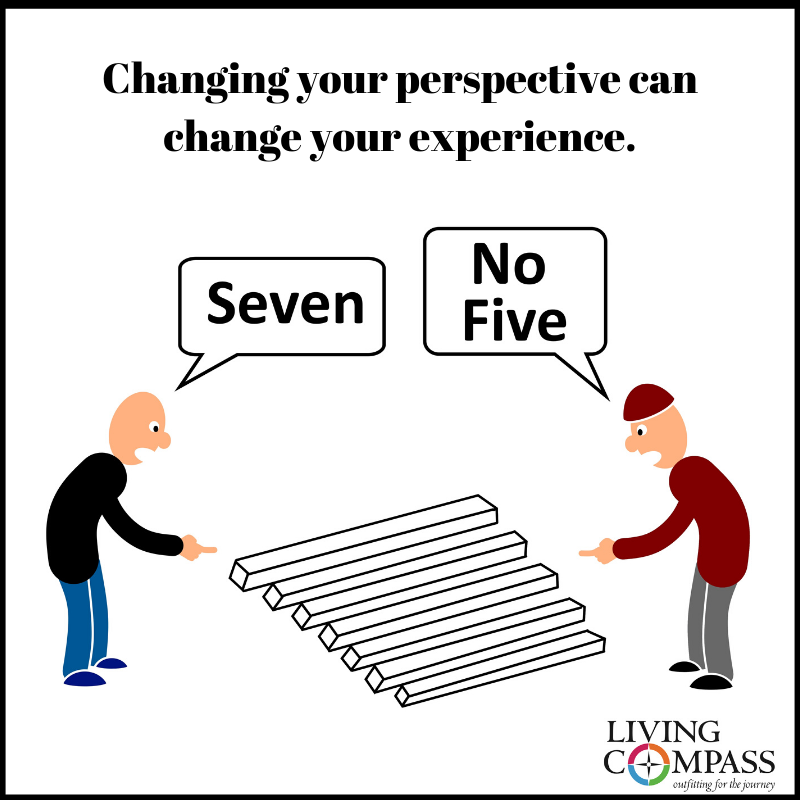
   As we head into the holiday season, which is also the snowy season here in the north, our attitudes about both will be  tested and revealed. There is a clever poem, written a few years ago by a high school student in Brooklyn, New York student named Chanie Gorkin, that serves as a good reminder of how much our perspectives shape our experience. The assignment she was given in her English class was to write a poem about her worst day ever. She completed the task in a most creative manner.

   Read Chanie's poem below, first from top to bottom, to get one perspective. Next, read it from the bottom up, and you will get an entirely different perspective.

Today was the absolute worst day ever

And don't try to convince me that

There's something good in every day

Because, when you take a closer look,

This world is a pretty evil place.

Even if

Some goodness does shine through once in a while

Satisfaction and happiness don't last.

And it's not true that

It's all in the mind and heart

Because

True happiness can be obtained

Only if one's surroundings are good

It's not true that good exists

I'm sure you can agree that

The reality

Creates

My attitude

It's all beyond my control

And you'll never in a million years hear me say that

Today was a good day

Next, read from bottom to top.

   Now take a moment to reflect on how your attitude and outlook might be shaping what you are currently experiencing.


Subscribe Now to Weekly Words of Wellness:

Click the button below to signup for the e-mail version of Weekly Words of Wellness. This weekly article can be shared with your community electronically and/or used for group discussion.

You can unsubscribe at any time.

The Hunger for Appreciation

 
The Hunger for Appreciation
 

The Hunger for Appreciation

  The dictionary points out that the word appreciate has four separate, but related definitions, each of which is a different way of expressing that someone or something is of value in the world.

Appreciate:

  1. To be grateful or thankful for: They appreciated their thoughtfulness.

  2. To value or regard highly: He appreciates her art work.

  3. To be fully conscious of; be aware of: We all appreciate the hard work involved in rebuilding the garage.

  4. To raise in value: The property’s value is appreciating. 

   As I’ve been thinking about the importance of showing appreciation this week, I have noticed how good it feels when someone appreciates me or something I have said or done. A kind word or note can mean so much.

  I have also been doing an experiment this week. I have been outrageously extravagant in expressing appreciation to everyone I can, including total strangers who hold a door, serve a cup of coffee, or help me with a customer service issue on the phone.  

  The response I have received to my experiment seems to verify the  truth of Mother Teresa’s words, “There is more hunger for love and appreciation in this world than for bread.” Each time I have expressed appreciation the person’e face has lit up with a smile, often accompanied by a heart felt thank you as well. Many of these folks it seemed were hungry for a positive affirmation of their efforts. 

  Who in your circle of connections could benefit from a little appreciation right now? Why not go ahead and try my experiment of being outrageously extravagant in doing so? And then note the difference it makes, both for them and for yourself. 

   And here’s an extra credit opportunity for you. Veteran’s Day is next week so why not make a special effort to appreciate a veteran you know. I already have a few veterans in mind to whom I will reach out. 

   I appreciate you for reading this far!  I would love to hear how your experiment of appreciating others goes this week—respond with an email, or comment about your experience on our Living Compass Facebook page.  


Subscribe Now to Weekly Words of Wellness:

Click the button below to signup for the e-mail version of Weekly Words of Wellness. This weekly article can be shared with your community electronically and/or used for group discussion.

You can unsubscribe at any time.

Response-Ability

 
Response-Ability
 

Response-Ability

   Last week after I challenged all of us, myself included, to go twenty-four hours without complaining, I received an unusually high number of communications. Apparently, I am not alone in wanting to break the habit of complaining. One comment from a reader especially stood out, “I didn’t realize that not complaining was actually a choice I could make.” Complaining can become so automatic it seems, that we forget that we always have a choice as to how we respond to what we are experiencing.

In 1946, Viktor Frankl, an Austrian psychiatrist, wrote a highly respected book, Man’s Search for Meaning, about his experience of surviving a concentration camp during World War II. The central point of this profound book is that no matter how bad things are around us, nothing can ever take away the fact that we still have a choice about how we will respond. This quote is the central point of the book.

“Between stimulus and response, there is a space. 
In that space is our power to choose our response. 
In our response lies our growth and our freedom.”

Responding is different than reacting, in that it involves our choosing the response we wish to make in any given situation. People with a more advanced degree of emotional and spiritual wellness realize that they have available to them a wide variety of responses in every situation. They are able to intentionally choose how to respond when they find themselves in stressful situations. Reacting, on the other hand, is more automatic and unconscious, Reactions are not well thought out, they just seem to happen.

Whichever choice we make, to react or respond, our choice will serve to create a cycle that either escalates or escalates stress, both within ourselves and between ourselves and others.

Every day we have hundreds of choices about how we will react or respond to what is happening around us. Complaining is just one of those things we can decide to do or not. Refraining from complaining is a conscious choice that is always available to us. I know for myself, and from the many readers I heard from, it is not an easy choice. Even though it is not easy, it is good to remember that we are ones “response-able” for our choices.


Subscribe Now to Weekly Words of Wellness:

Click the button below to signup for the e-mail version of Weekly Words of Wellness. This weekly article can be shared with your community electronically and/or used for group discussion.

You can unsubscribe at any time.