
The Wisdom of Momisms

 
The Wisdom of Momisms
 

The Wisdom of Momisms

Once again it is time for the annual Mother’s Day column where I share some of the classic things mothers like to say, and then reflect on the wellness wisdom that is contained within these  “Momisms.” What follows are a few of the sayings that I have shared on previous Mother’s Days, along with a few new ones, ones some of you sent in this week. Thank you to all who shared these bits of wisdom you learned from your mothers. I hope you all enjoy them and will pass them along to others in honor of all mothers.

“I’m not interested in who started it!” The wisdom here is that a lot of time and energy is often wasted in trying to figure out “who started it.” Who hasn’t spent more time arguing with someone about who started a problem than they have spent on resolving the problem? Focusing on “who started it” is one way of playing the “blame game,” and is rarely helpful. You don’t need to figure out who started a problem at work or home to be part of the solution.

“If you keep making that face, one of these days it will freeze that way!” This “Momism” contains some great wellness insights. The first is that the behaviors we choose, over time, become habits, and habits always have consequences. It is important then to carefully observe the habits we are forming. The second insight of this “Momism” has to do with the way we treat others. If I am regularly in a hurry and don’t take time to be kind to people, at some point their opinion of me will “freeze.” They may well come to believe that I am a person who is self-absorbed or unkind. We all form opinions of others based on their behaviors and it easy for those opinions to become frozen and difficult to change, even if the person’s behaviors actually do change at some point.

“For a friend in need, say a prayer and roast a chicken.” We need to remember to integrate the spiritual with the practical. A story is told of some visitors from a church who came to call on an elderly parishioner who they knew was having trouble maintaining her home. When the visitors arrived, they announced that they had come to pray with her. The woman, not missing a beat, replied, “That’s great as I need prayer. But when you are done praying I’d really love for you to help me wash all those dishes piled up in the sink.” Faith without works can be empty.

“This moment is fleeting in the overall scheme of things.” Our emotional and spiritual wellness is enhanced when we remember two things. First, it is wise to seek to live in the present moment, and second, any current struggle we may have is more bearable when we place it in the context of life’s larger time frame.

“Take care of a goldfish, and then you can get a dog.” When taking on any new challenge or responsibility, it’s important to start small. New habits and big goals are realized in small steps. For example, develop a regular habit of walking before you try to run your first 5K, or take a class on a subject before deciding on that major. Another way of saying this is that, “Life is hard by the yard, but a cinch by the inch.”

“I don’t care what everybody else is doing; you are not everybody else!” Another version of this is “just because everyone else is jumping off a cliff, doesn’t mean that you should, too.” Both ideas are meant to encourage us to dare to think for ourselves and to remember that going along with the crowd is not always the best decision.

“The best way to have a friend is to be one.” All relationships are important and need to be cared for and nurtured in order to stay strong and healthy.We reap what we sow in relationships. This is the more positive version of, “If you can’t say something nice about someone, don’t say anything at all.” This reminds us of the importance of sharing our appreciation and gratitude with others, as that is what builds and strengthens relationships.

“Please call me when you get there, so I will know you have arrived safely.” This statement is a sweet expression of love and concern, although when we were young, we might have rolled our eyes, thinking that our mom was annoying and trying to control us. The wellness principle here is that it makes a positive difference to have others around us who are concerned for our well-being and to care for others as well.

As we pause to celebrate all mothers today, may we also remember the wisdom that they, along with other influential women in our lives, taught us over all the years, and be thankful.


Subscribe Now to Weekly Words of Wellness:

Click the button below to signup for the e-mail version of Weekly Words of Wellness. This weekly article can be shared with your community electronically and/or used for group discussion.

You can unsubscribe at any time.
Life in the Midst of the Mess

 
Life in the Midst of the Mess
 

Life in the Midst of the Mess

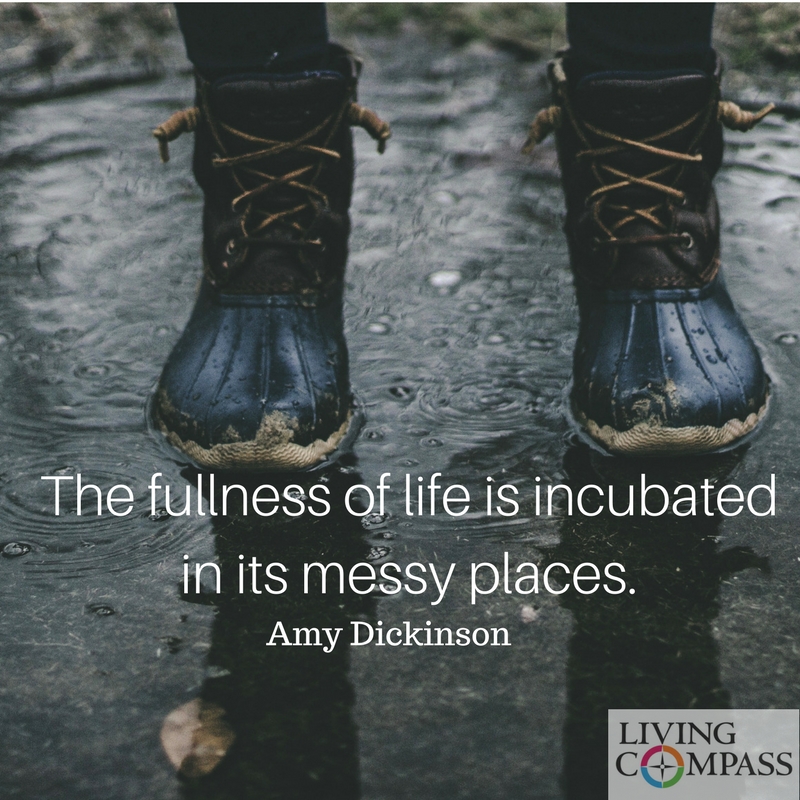
Change is messy. Perhaps this is why people, as well as families and organizations,  often try to avoid it. Change, whether planned or unplanned, is always hard. When change first happens the old normal is gone, and the new normal is not yet established. That time in between the old and new normal is always messy. In such times we can find comfort in the quote from Amy Dickinson, author and newspaper columnist, at the top of this column, “The fullness of life is incubated in its messy places.” I can give witness to the truth of this in my own life and in the countless people I have had the honor to help as a psychotherapist over the last three and half decades.

At this time of year in the Midwest, we know something about messy.  As the long winter loses its grip and the mounds of snow have just melted, our roads, sidewalks, trails, and yards become quite messy and even ugly.  In fact, I have heard it said here in the Midwest, as well as many other places in the country, that there are actually five seasons each year if you add the “mud season” that exists between winter and spring. Winter held on a little longer than usual this year and so just this past week we have begun experiencing our annual mud season.

Part of what creates the massive amount of mud and messiness this time of year is the fact that after a long, cold winter the depth of the ground freeze is quite significant.  During the mud season, while the warming temperatures thaw the surface of the ground, the deeper ground remains frozen, and thus the melting water at the surface is unable to percolate down into the soil.  Until the deeper ground thaws, the water stays on the surface creating increasingly deeper levels of mud and mess.  Many dirt roads and walking trails become impassable during this time of year until the deeper thaw finally occurs, allowing the water to seep down into the soil and then to flow on into the greater watershed, allowing the dirt to finally dry.

The mud season, itself a time of transition between winter and spring, strikes me as a powerful metaphor for describing what it feels like when we are going through times of change in our lives, be it as individuals, families, or organizations.  Times of transition are always messy, and the path forward can sometimes become muddy and hard to navigate.  If there is significant grief or loss of any kind involved in our transition, the initial thawing often feels particularly muddy and challenging.

Whatever type of mud season we may be experiencing, the way through is the same.  Be patient. Put your boots on, keep your head up, and keep moving forward. Be careful to watch where you are walking, so that you avoid any potential danger. Walk with someone else so you can help each other when the mud is, and you are at risk of getting stuck. Be patient, knowing that in time the ground will eventually thaw and the mess and the mud will gradually pass.  The path may not ever be the same, but a new way forward, a new normal, is sure to emerge in time.  And may we find comfort in remembering that, “The fullness of life is incubated in its messy places.”


Subscribe Now to Weekly Words of Wellness:

Click the button below to signup for the e-mail version of Weekly Words of Wellness. This weekly article can be shared with your community electronically and/or used for group discussion.

You can unsubscribe at any time.
Picturing Self-Reflection in a Whole New Way

 
Picturing Self-Reflection in a Whole New Way
 

Picturing Self-Reflection in a Whole New Way

In our Living Compass Wellness Initiative, we teach that one of the first steps to living well is the practice of honest self-reflection. We need to start with an honest look at our lives, a self-assessment, of how things are and where we are before we can decide where we want to go.

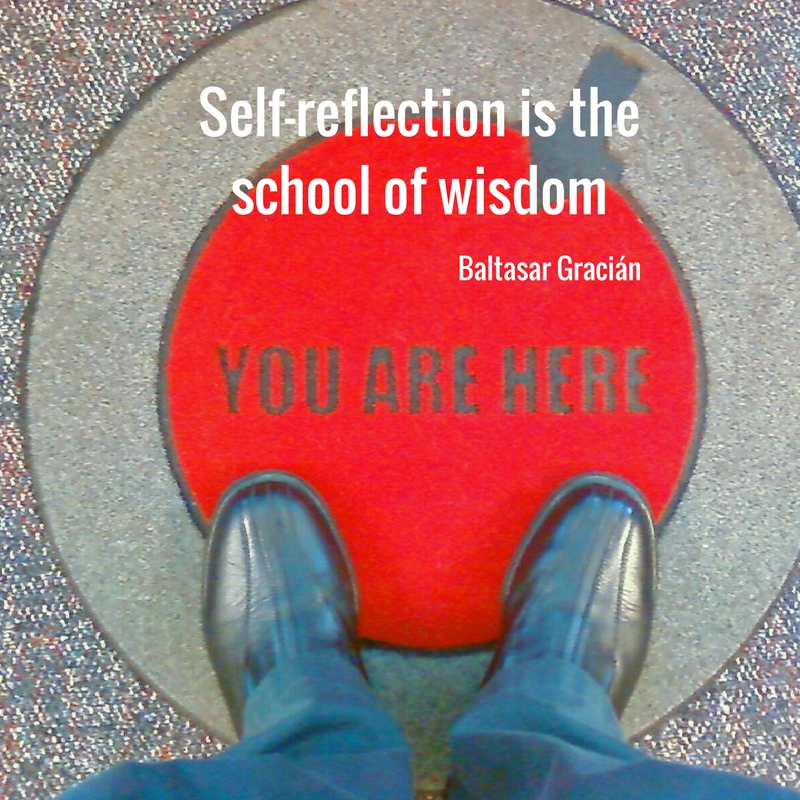
This process of self-reflection is similar to what we do if we find ourselves visiting a city for the first time. If we are walking around trying to find a particular attraction we wish to visit, we are relieved when we come across a  display with a large map on it. When this happens, we will typically look for two things. First, we will look for our desired destination, and then we will look for the “You Are Here” dot or arrow. Without first getting an accurate read on where we are, it is difficult to figure out how to get to where we want to go.

This week I heard about a whole new approach to this practice of self-reflection. This particular approach was being recommended for anyone who wants to lose weight or simply make a positive change regarding their eating habits. The recommendation was to use your smartphone and snap a picture of everything you eat and drink throughout the entire day. At the end of the day, you then review all of your photos. This exercise helps bring into your awareness the truth of what you are eating and is especially helpful when repeated on a daily basis.

This novel approach to self-reflection is brilliant for two reasons. First, it gives a person an accurate record of what they are currently consuming each day. Second, the very act of stopping to take a snapshot of what one is about to eat or drink creates a pause, a pause where a person can ask themselves, “Do I really want to eat or drink this right now?” That pause provides an extended moment for self-reflection and allows space for the opportunity to make a different decision.

Whether we try this idea or not, it serves as an excellent reminder.   There is a definite benefit to pausing on a regular basis to take a “snapshot” of our current habits and choices regarding various aspects of our lives. We can all benefit from pausing from time to time to take a snapshot of our relationships, work, spirituality, care for our body, financial decisions (spending, saving, and sharing), and our current balance between caring for self and caring for others.

If all of this sounds  a little new age-ish, it might be helpful to know the source of the quote at the top of this column, “Self-reflection is the school of wisdom.” That quote is from a Jesuit priest and philosopher by the name of Baltasár Gracian who was born in 1601.  And going back much farther, we remember that Socrates said, “The unexamined life is not work living.”

So while the wisdom regarding the importance of self-reflection has been around for a while, I am assuming that making it a regular part of one’s life is as challenging today as it was all those years ago.

So pick the destination you want to get to in your life, get an accurate picture of “You Are Here” and start taking the next steps that will help you reach your destination.


Subscribe Now to Weekly Words of Wellness:

Click the button below to signup for the e-mail version of Weekly Words of Wellness. This weekly article can be shared with your community electronically and/or used for group discussion.

You can unsubscribe at any time.

The Yardstick of Success

 
The Yardstick of Success
 

The Yardstick of Success

My father died seven years ago this week, and as I reflected on the anniversary of his death, I remembered what a tremendous honor it was to give the eulogy at his funeral. I have spoken at many funerals through the years, but of course, this one was different. This one was both harder and easier for obvious reasons.

I had no trouble, of course, coming up with material or memories from which to to draw. The most challenging part was limiting what I could focus on in the time I had. I chose to celebrate the way he served as a constant caregiver to my mother for many years until she herself passed away seven years before his death, as well as the bravery he showed in serving our country in World War II, including being on the front lines of Utah Beach during the D-Day invasion. I also touched on all of the wonderful adventures he took our family on, such as two-week-long camping trips and instilling in us his love of birds and bird watching.

Have you ever noticed that what is often shared during a funeral eulogy seems to measure a life well lived by a different metric than the one that is most often used by people when they are busy living their lives? In a eulogy, there is rarely, if ever, talk of financial success, societal status, or material possessions.  Instead, the focus is on how well the person lived—how they treated family and friends, and how they attempted to leave the world a little better and kinder place in some small way.

Barbara Bush’s passing this week brought what I am saying into focus. The full version of her quote at the top of this column says it best. All of the memories I have heard people share about Barbara Bush speak to the fact that she put these words into action in her own life.

“Never lose sight of the fact that the most important yardstick of your success will be how you treat other people – your family, friends, and coworkers, and even strangers you meet along the way.”

Sometimes when I have given a eulogy at a funeral, people will come up to me afterwards and say something like, “That was a beautiful eulogy you wrote!” My response is always the same, “Thank you, but I am not the one who wrote it. It was actually written by Barbara or Frank or _______ (insert the name of the deceased) in the way they lived their life.”

When someone we know dies, it is certainly a time for us to remember and reflect on how they lived their life. It can also provide a good opportunity for us to reflect on how we are currently living our own lives, and what yardstick we are using to measure success.

I close with one more quote from Barbara Bush that helps me to remember how to measure what is most important in life:

“At the end of your life, you will never regret not having passed one more test, not winning one more verdict or not closing one more deal. You will regret time not spent with a husband, a child, a friend or a parent.”


Subscribe Now to Weekly Words of Wellness:

Click the button below to signup for the e-mail version of Weekly Words of Wellness. This weekly article can be shared with your community electronically and/or used for group discussion.

You can unsubscribe at any time.

Be a Hero

 
Be a Hero
 

Be a Hero

I have had the chance to be in touch with over one thousand heroes this week. There are of course many kinds of heroes. In this case, I am referring the above quote from Fred Rogers, “Anyone who does anything to help a child is a hero to me.”

Last week our Samaritan Family Wellness Foundation began offering a free download of our Teen Compass Wellness Notebook, a link to which can be found at www.theteencompass.org. Since then, over one thousand people have responded. People from every state and ten different countries have taken us up on our offer. We can see from the orders and posts on social media that these people work with youth in a variety of capacities; they are teachers, school counselors, faith leaders, parents, grandparents, scout leaders, youth ministers, marriage and family therapists, social workers, school administrators, non-profit youth leaders, state and county youth mental health workers, and a variety of other adults who care deeply about the well-being of our young people. Each of these people is a hero in my opinion.

All of us have the capacity to influence young people, simply by the behaviors and choices we model in our own lives. Another of my favorite quotes about helping young people, this one from basketball coach John Wooden, makes this point, “Young people need models, not critics.” Teens don’t need, “What’s wrong with young people today?” Instead, they need adults who model values, character, and wellness, and who are willing to get involved and be a positive influence.

And if you wonder if young people are really influenced by the important adults in their lives, here’s one last quote to remind us that whether they appear to be listening or not, they are paying attention. Author Robert Fulgrum reminds us, “Don’t worry that children never listen to you; worry that they are always watching you.”

Who are the youth in your life, in your corner of the world that you have a chance to positively influence? Our youth need us as models, not critics, and they are always watching us, even when it may not appear that are not listening to us. So go ahead-be a hero and make a difference in some young person’s life today.


Subscribe Now to Weekly Words of Wellness:

Click the button below to signup for the e-mail version of Weekly Words of Wellness. This weekly article can be shared with your community electronically and/or used for group discussion.

You can unsubscribe at any time.