The Generosity of Abundance


The Generosity of Abundance

Grounding Our Generosity in God’s Generosity

Reflection By Scott Stoner

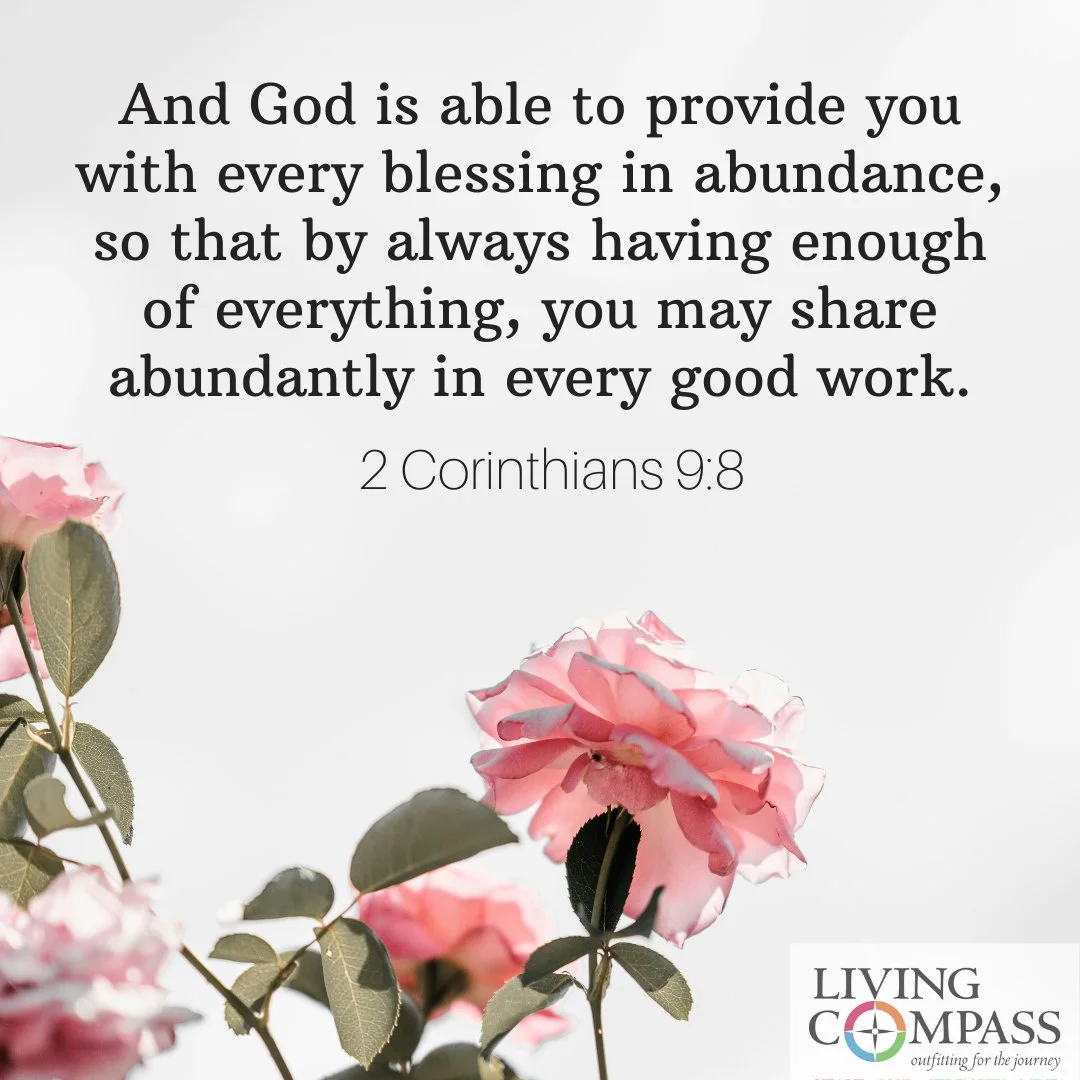
And God is able to provide you with every blessing in abundance, so that by always having enough of everything, you may share abundantly in every good work.
- 2 Corinthians 9:8

One of the greatest barriers to generosity is operating from a scarcity mindset—the belief that there is not enough to go around. This can create anxiety, hoarding, and competition rather than the joy and freedom that accompany true generosity.

God’s generosity, however, flows from abundance. The natural world demonstrates this everywhere. Consider how a single apple tree produces hundreds of apples, each containing multiple seeds capable of growing into new trees. Notice how the ocean contains countless drops of water, each one essential yet part of an inexhaustible whole.

When we understand that God’s resources are limitless, we can approach generosity with confidence rather than fear. We don’t have to worry about running out of love, forgiveness, or compassion because these gifts are continually renewed by God.

An abundance mindset recognizes that generosity actually creates more abundance. When we give freely, we open ourselves to receive more. When we share our resources, we often discover that our capacity to give has increased.

This doesn’t mean we should be unwise or ignore practical realities. Rather, we approach giving with trust in God’s bounty, hearts open to how God multiplies our offerings. Abundance thinking is counter-cultural in a world that constantly tells us we need more to be happy.

Making it Personal: Where do you tend to operate from scarcity rather than abundance? How might deeper trust in God’s generous provision change your giving? Challenge one scarcity thought today by acting from abundance—share something you’ve been holding onto, offer encouragement generously, or give someone the benefit of the doubt.
God’s Generosity in Nature


God’s Generosity in Nature

Grounding Our Generosity in God’s Generosity

Reflection By Scott Stoner

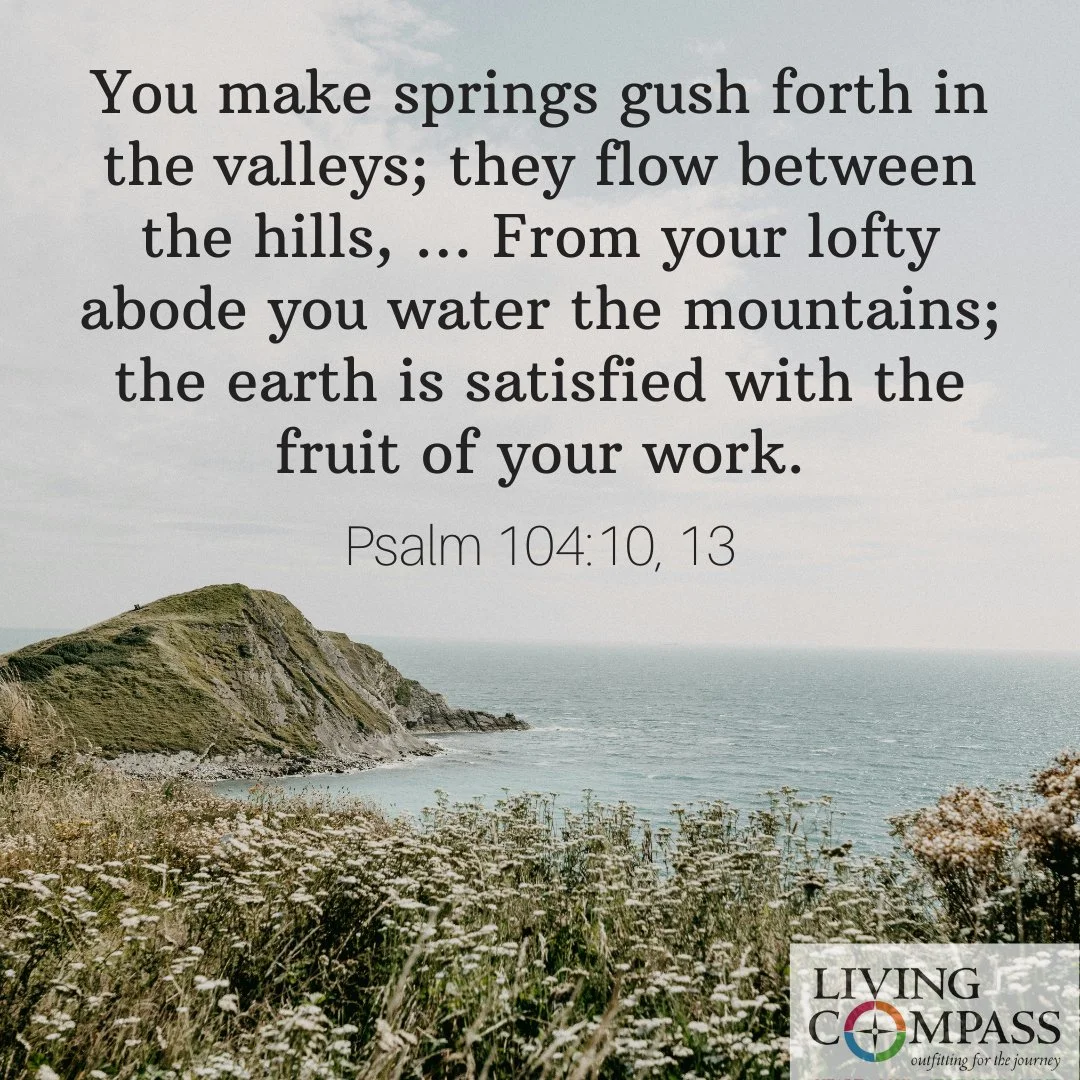
You make springs gush forth in the valleys; they flow between the hills, … From your lofty abode you water the mountains; the earth is satisfied with the fruit of your work.
- Psalm 104:10, 13

Nature has been referred to as God’s first sacred text. Before the sacred texts of the Bible, there was and continues to be the holy text of God’s creation.

Remembering that the root of the word generosity means “to give birth” or “to give life to,” we see in nature the ongoing life-giving generosity of our Creator. One of the signs of how God is present in creation is the response that almost all people have to spiritual experiences they describe in nature. Creation pulsates with the generous energy of God. Like fish who live in the ocean, we live and move and have our being in the abundance of God’s self-giving love.

As with other acts of generosity—whether from God or others—it is all too easy to take such generosity for granted. Stopping to pay attention to the beauty of a butterfly, a bird’s song, a majestic mountain, or the smell of the air after a recent rainfall are simple everyday spiritual practices that reawaken us to the presence of the Divine surrounding us.

When we pause and truly pay attention, the ground we are standing on is always holy ground. Nature’s generosity is constant and unconditional—the sun shines on the just and the unjust, the rain falls on both the grateful and the ungrateful.

Making it Personal: When have you felt close to God in nature? What is something simple you might do or pay more attention to today that will help you connect with God through nature? Consider spending at least five minutes outdoors today (or by a window if necessary) simply observing God’s generosity in creation, noticing what you see, hear, smell, or feel.

Letting God Be Generous to Us


Letting God Be Generous to Us

Grounding Our Generosity in God’s Generosity

Reflection By Scott Stoner

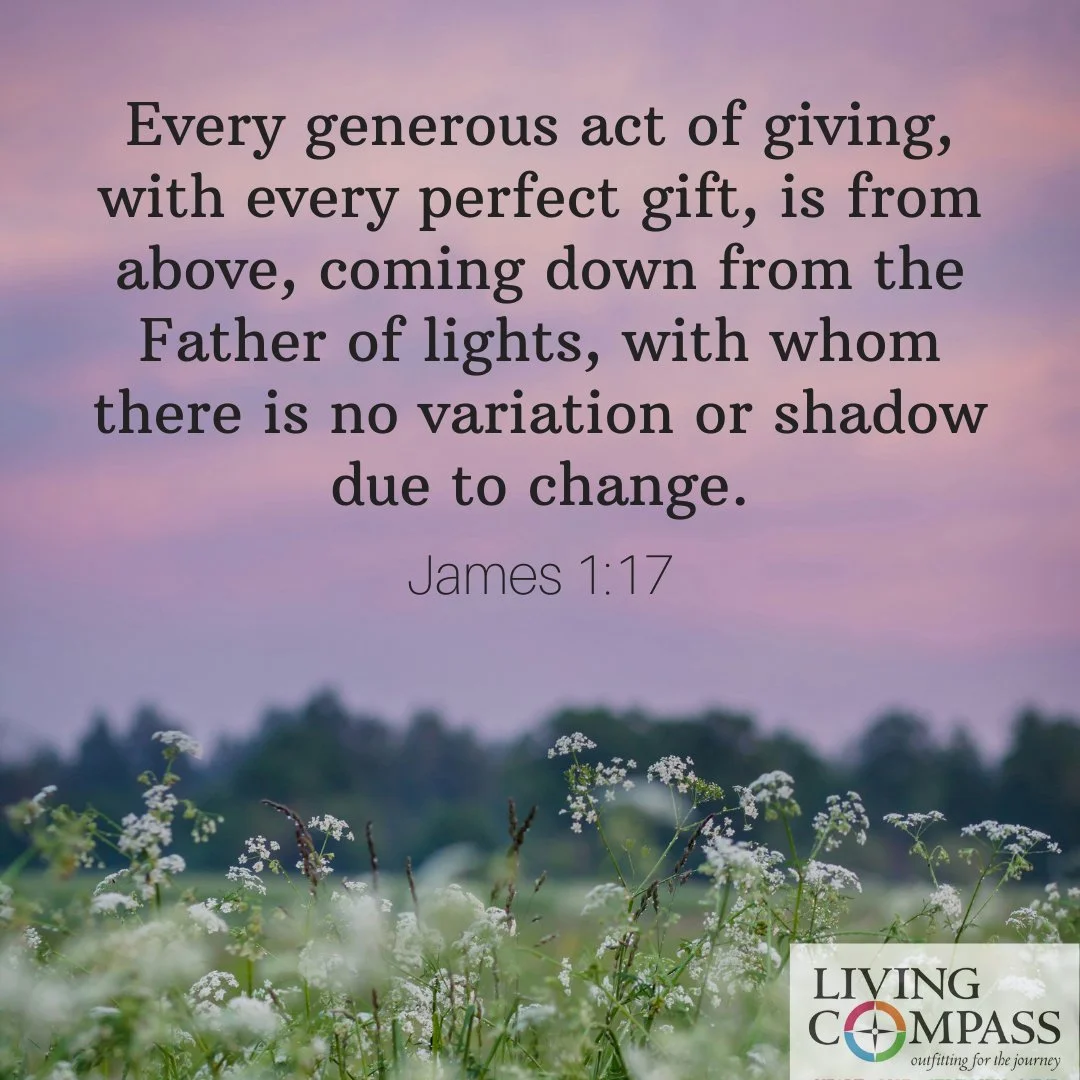
Every generous act of giving, with every perfect gift, is from above, coming down from the Father of lights, with whom there is no variation or shadow due to change.
- Luke 15:22-24 (ESV)

Sometimes we resist God’s generosity out of pride or fear. We may feel unworthy of God’s gifts, or we may worry that accepting them will somehow obligate us in ways we’re not prepared for. Yet spiritual maturity includes learning to be humble and grateful recipients of God’s abundant love.

There is a paradox in the spiritual life: we cannot truly give what we have not received. If we consistently refuse to let God be generous to us, we will find ourselves trying to give from empty wells. The most generous people are often those who have learned to welcome God’s gifts with open hearts and grateful spirits.

Consider how a flower absorbs sunlight. It doesn’t question whether it deserves the sun’s rays or worry about how to repay them. It simply opens its petals and takes in what it needs to grow and bloom. In the same way, we are invited to open our hearts to God’s generosity with childlike trust.

This Advent season offers us countless opportunities to practice receiving God’s gifts: the gift of rest, the gift of beauty in creation, the gift of relationships, the gift of hope that comes with the promise of Christ’s birth.

Making it Personal: In what ways might you be resisting God’s generosity? What would it look like to become more gracious in welcoming God’s gifts? Practice this today by consciously noticing one gift from God—whether it’s a moment of beauty, an act of kindness from another person, or simply the breath in your lungs—and receiving it with deliberate gratitude, without trying to “earn” it.

The Parable of the Generous Parent


The Parable of the Generous Parent

Grounding Our Generosity in God’s Generosity

Reflection By Scott Stoner

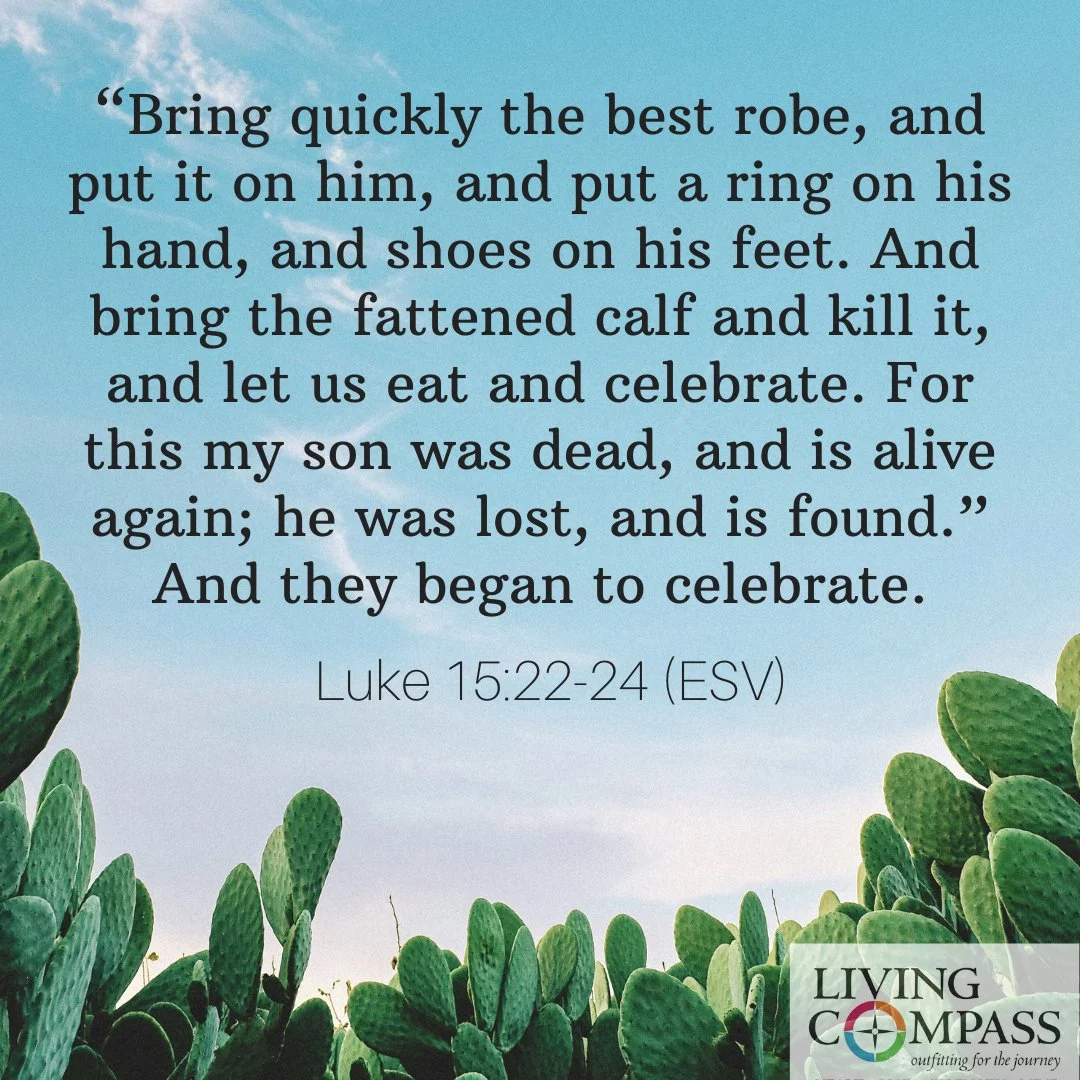
“Bring quickly the best robe, and put it on him, and put a ring on his hand, and shoes on his feet. And bring the fattened calf and kill it, and let us eat and celebrate. For this my son was dead, and is alive again; he was lost, and is found.” And they began to celebrate.
- Luke 15:22-24 (ESV)

The parable of the prodigal son is one of the best-known stories that Jesus shared with his followers. It is the story of a loving father who forgives his wayward son after the son leaves home and wastes his share of his inheritance. Thinking he has forsaken his father so entirely that he will not be welcomed home, the son is overwhelmed when instead his father responds with lavish generosity—offering his wayward son a ring, the best robe, a fatted calf, and a grand feast.

While we commonly know this story as the Parable of the Prodigal Son, it could also be called the Parable of the Generous Parent, reflecting the primary focus on how extravagant God’s love is for us. No matter how wayward we have been in our lives, we can always return to God for love and forgiveness, for we have a lavishly generous God.

This parable reveals the heart of God’s generosity—it is not based on our worthiness or performance, but on God’s unchanging love. The father in the story doesn’t wait for an apology or proof of change; he runs to meet his son while he is still far off. This demonstrates generosity of the heart—emotional generosity that flows from love rather than duty.

Making it Personal: What does this story teach you about God’s generosity? When this parable is discussed in Bible studies, members often wonder if they were the father in this story, would they have responded with such love and generosity? How would you answer that question for yourself? Today, notice when someone needs emotional generosity from you—patience, forgiveness, or understanding—and respond with the same lavish love the father showed.

Grounding Our Generosity in God’s Generosity


Grounding Our Generosity in God’s Generosity

Theme For Week One

Reflection By Scott Stoner

We love because God first loved us.
- 1 John 4:19

Yesterday’s reflection introduced us to the profound connection between God’s generosity and our own capacity to be generous. This week, we will deepen our understanding of how God’s abundant love serves as the foundation for all authentic generosity.

When we ground our generosity in God’s generosity, we discover that giving becomes not a burden but a joy. It flows naturally from hearts that have been touched by divine love. This is fundamentally different from generosity motivated by guilt, obligation, or the desire to be seen as good by others.

The season of Advent invites us to slow down and remember that every good gift comes from above. As we prepare our hearts for Christmas, we have the opportunity to cultivate a deeper awareness of God’s generous presence in our lives. This awareness becomes the wellspring from which our own generosity flows.

This week we will explore how practicing generosity in heart, soul, strength, and mind creates a foundation for living that is both deeply meaningful and transformative.

Making it Personal: How does knowing that God is the source of all generosity change your perspective on giving? What might it look like to ground your generosity more deeply in God’s love this Advent season? Each day this week, identify one specific way God has been generous to you in the past 24 hours, and consider how you might respond with generosity toward someone else.

Generosity as an Antidote


Generosity as an Antidote

The First Sunday in Advent

Reflection By Randall Curtis

Be on guard so that your hearts are not weighed down with dissipation and drunkenness and the worries of this life.
- Luke 21:34

I am like many Americans—an easily excitable consumer. I am certain that Internet ad companies love me. I love finding the new restaurant, listening to the new song, watching the new show and finding the new internet meme. When a squirrel jumps across the path where my dog and I often walk, I am the person who agrees with my dog (at least initially) and thinks chasing the squirrel is a really fun idea. I write this with a confessing heart, but I also know that I am not alone.

In a world that is filled more and more every day with tempting distractions, like cell phones, tech gifts, and pop-up advertisements everywhere, it is easy to fall into the trap of trying to consume the newest trend. It is easy, in the race to keep up with it all while worrying about what we might be missing, to spend the day jumping from new excitement to new excitement, from new worry to new worry.

In the first reading of Advent we are told to, “Be on guard so that your hearts are not weighed down with dissipation and drunkenness and the worries of this life.” These distractions are the new “drunkenness and worries of this life,” which means that as we prepare for Christmas and God breaking into the world, we will have to make sure we look up from our phones to see it.

This Advent can be a time to prepare for Christmas by stopping the drunken consumption of the newest thing. To put our phones down and stop the worry that is only a notification away.

Then we can ask ourselves:

  • What am I missing when I get distracted by “the new”?

  • Am I giving more than I am taking from the world?

  • How can I be on “guard” against all the ways the insatiable quest for the new sneaks up on me?

  • Are there others in my community who need something basic that I could provide, yet might not see in my quest to discover the latest and greatest?

  • How can I offer generosity toward my fellow human beings rather than mindlessly taking what the world offers, only a tap or swipe away?

  • How can I be more generous to my family, friends, and community as I prepare for the coming of Christ into the world?

Advent is the perfect time to explore how we might give more of ourselves on behalf of God in the world, and how that generosity might be the perfect antidote to being “anxiously drunk.” One way we can “be on guard” is to ask and answer questions like these together. I hope you’ll join me.